
How to use seaweed.
If you have never cooked with seaweed, start here. The basics: how to rehydrate it, which format to use for what, how much to add and how to store it.
The rule that sums it up: cold water and a few minutes. The salt in the seaweed does the rest.
The plant
Each format comes from a different part of wakame (Undaria pinnatifida). Knowing the plant helps you choose what to use.

- Blade
- The leaf. Dried whole it is the whole leaf; without the midrib and flaked, the flakes.
- Midrib
- The central rib, thicker and crunchy. The most mineral part.
- Sporophyll
- The fertile frill at the base. This is mekabu.
- Holdfast
- What anchors it to the rock. Not eaten.
The key move: rehydrating
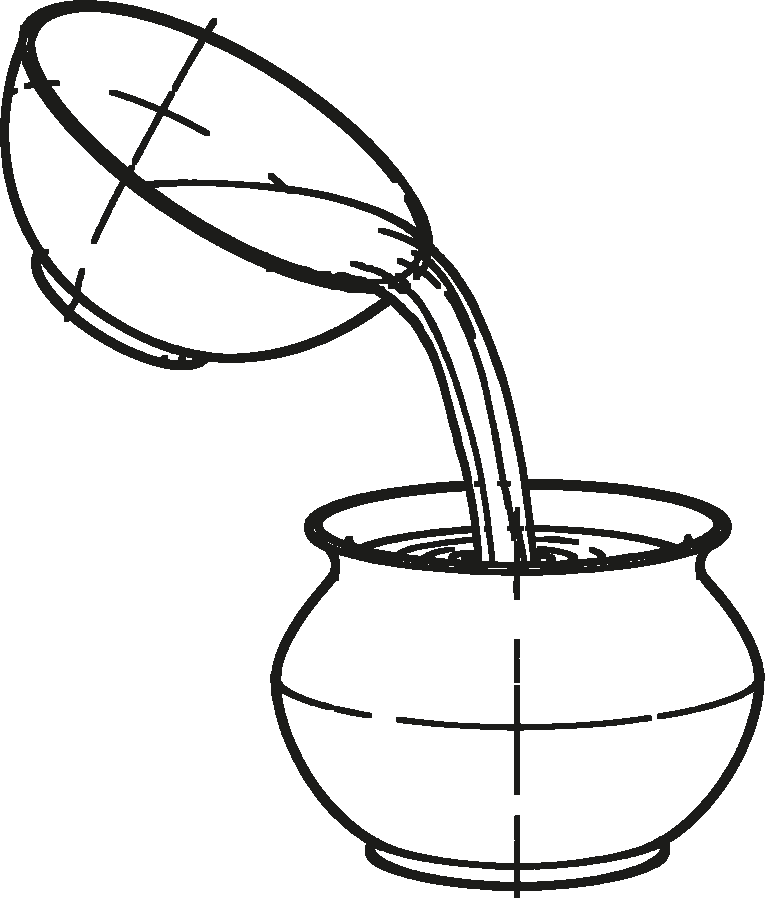
Dried seaweed rehydrates in cold water (never hot, which turns it slimy and ruins the texture). It unfolds in a few minutes.

Whole leaf
4–10 min in cold water
It unfolds and turns silky; it grows four to six times. Drain without squeezing and cut with scissors.
Flakes
Not needed
Sprinkle it straight on; it absorbs the moisture of the dish. If you like, 3–4 min in cold water.
Powder
No rehydration
Blend it straight into liquids, doughs or salt mixes.
Mekabu
A brief blanch
Pour boiling water over it, or 20–40 s in boiling water until it turns green. Cool it and chop it fine: that is how it releases its mucilage and turns silky, almost gelatinous.
Water is not always needed. Seaweed rehydrates in any liquid and takes on the flavour of whatever wets it. In a vinaigrette, ten minutes: it rehydrates and marinates in one step. In beaten egg, five minutes before the pan. In milk or cream, an hour in the fridge. In a hot broth it rehydrates on its own, in the bowl.
The soaking water
Since the seaweed has no added salt, the soaking water comes out salty and mineral and works as a stock: a soup base, cooking liquid for rice, pulses or potatoes, water for bread dough. Soaking moves part of the seaweed's iodine and arsenic into the water, so use it with the serving given below. If you are eating more seaweed, or if it is for someone pregnant, for children or for people with thyroid problems, it is better to discard it. It keeps two days in the fridge and three months frozen in an ice tray.
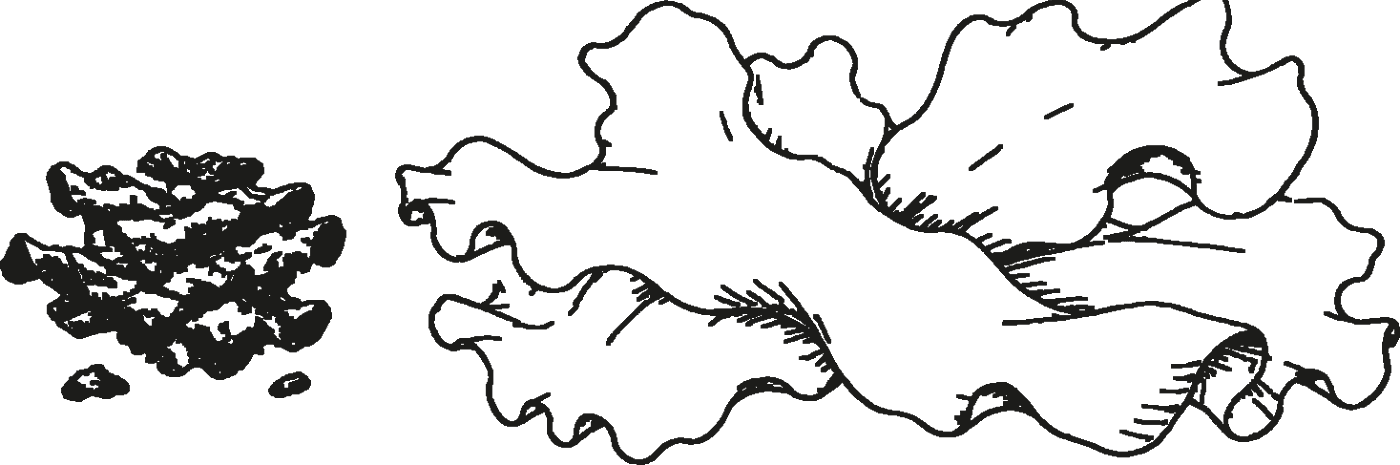
By format
Whole leaf
The whole dried leaf, minimally processed.
Soups, salads, long broths.
Flakes
Leaf only, no midrib, in flakes.
Sprinkling over eggs, rice, salads, doughs.
Powder
Whole seaweed finely milled.
Smoothies, baking, seaweed salt, thickening broths.
Mekabu
The wakame sporophyll: silky and mineral.
Soups and salads where you want texture.
Which format for what
A soup or salad
Whole leaf
To sprinkle on a dish
Flakes
To add to a smoothie, dough or salt
Powder
A silky texture
Mekabu
How much to use
As a starting point: 1 to 3 g of dried wakame or mekabu per person (half a tablespoon of flakes is about 1 g) and 3 to 5 g of luche. Seaweed accompanies; it is not the base of the dish. Brown seaweeds are high in iodine. They are not advised in quantity during pregnancy or breastfeeding, for young children, or with thyroid or kidney disease. Ask your doctor.
In the kitchen
It salts without a salt shaker: lower the salt in the dish before adding it. It brings a saline, mineral depth that is not a fishy taste, a firm texture between leaf and cartilage, and some body to liquids.
Rehydrated and raw, it goes into salads or quick pickles. Dried, it cooks with the rice and rehydrates in the pot. Dried with oil, fried or in a hot oven, it becomes a chip. Ground in a grinder, it is table salt with flavour. And the soaking water makes the stock. It can also be nibbled dry, straight from the bag, in small amounts.

The nutritional values for this species come from scientific literature. We have not analysed this batch yet. When we do, it will be published.
Storage
Dried seaweed lasts a long time if kept dry: store it in an airtight container, in a cool dark place, away from moisture. Once rehydrated, use it the same day.
Tips & common mistakes
- Cold water, never hot: heat turns it slimy and ruins the texture.
- It is salty: taste the dish before adding salt.
- Keep it dry and airtight; moisture is its enemy.
- If it over-hydrates, drain it well before using.
The seaweeds
Wakame
Mild, versatile, green. The easiest one to start with.
Luche
Red, sweet and delicate. For rice, fish, furikake.
Mekabu
The fertile base of wakame: silky and mineral; it releases a mucilage that binds broths and sauces.
From the sea to the bag
Undaria reached Puerto Madryn with shipping traffic, in ballast water or attached to a hull; nobody knows which. Its genetics link it to populations in Korea, China and Australasia. In 1992 a diver found it on the pier pilings. Nobody had seen it in Argentina before. Today it appears in patches, from Puerto Deseado to Mar del Plata.
The cycle

It is harvested between August and October, while the seaweed is young. The sea lets us dive about fifteen days a month. In summer all the seaweed dies and detaches. In July a new cohort grows back.
The forest
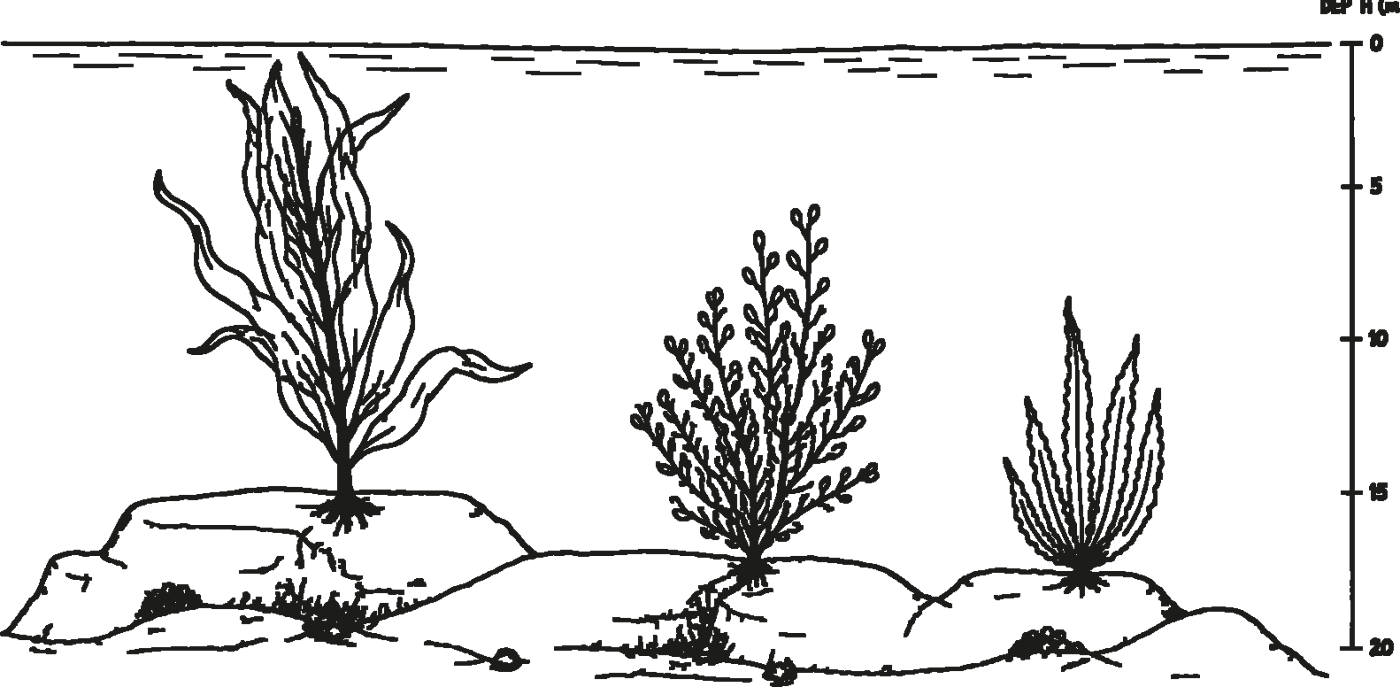
It grows down to fifteen metres. The best quality is at three to four metres: that is where we harvest.
The cut
We free-dive or use tanks, and cut by knife. We cut below the sporophyll: that plant does not grow back and does not release the spores it would have released until December. Each plant we cut stops adding spores. Whether harvesting relieves the seabed is something we want to measure, not take for granted.
Drying
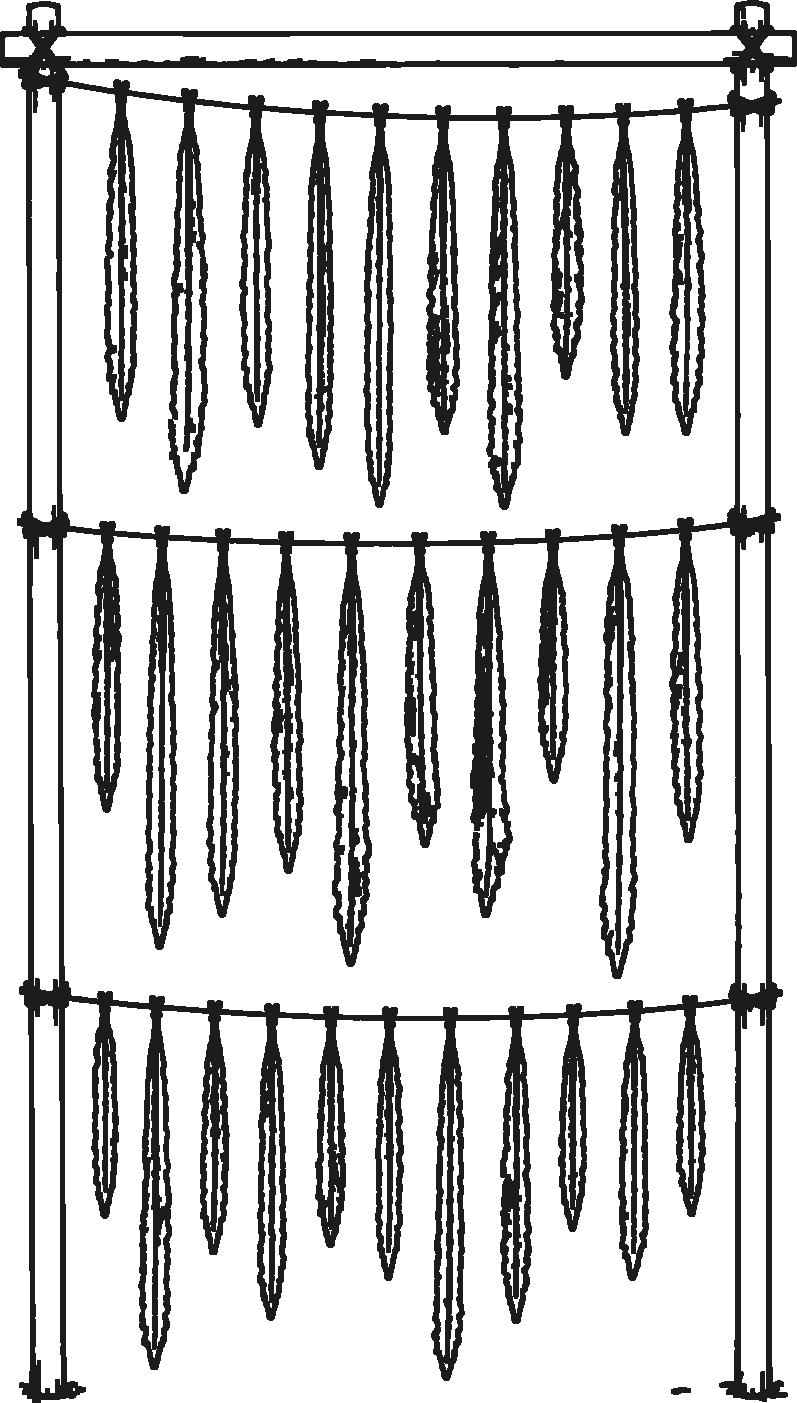
The wakame you find in shops today is blanched and salted. This one is not. It is rinsed in fresh water and hung. It dries in the cold Patagonian air for four to six days, using no energy. There is no backup: if humid days come, it takes longer to dry.
- Depth
- 3–4 m
- Bycatch species
- under 0.5%
- Harvested per 1 kg of dried wakame
- 10 kg